Programme for International Student Assessment (PISA) 2022 | (News and Research 365)
Singapore again tops the PISA International student achievement rankings, in math (but also science and reading)
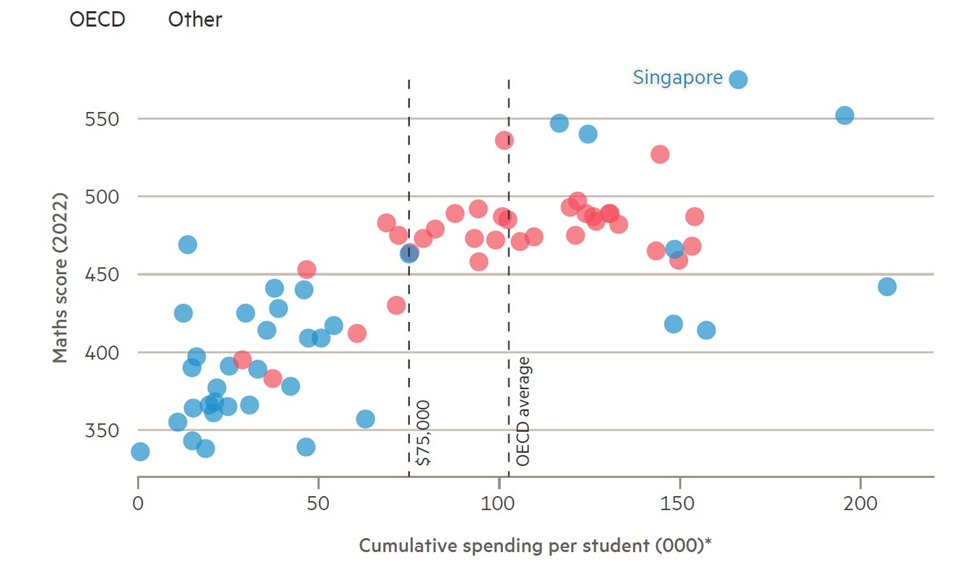
The true extent of damage to schools from Covid-19 | Financial Times | If any one country had schools that were designed to cope with the Covid pandemic, it would be Finland, which already had a highly digital education system that made the logistics of distance learning surprisingly easy. Yet even in Finland, the impact has been stark.
Top performers in math (focus subject for 2022) all from East Asia

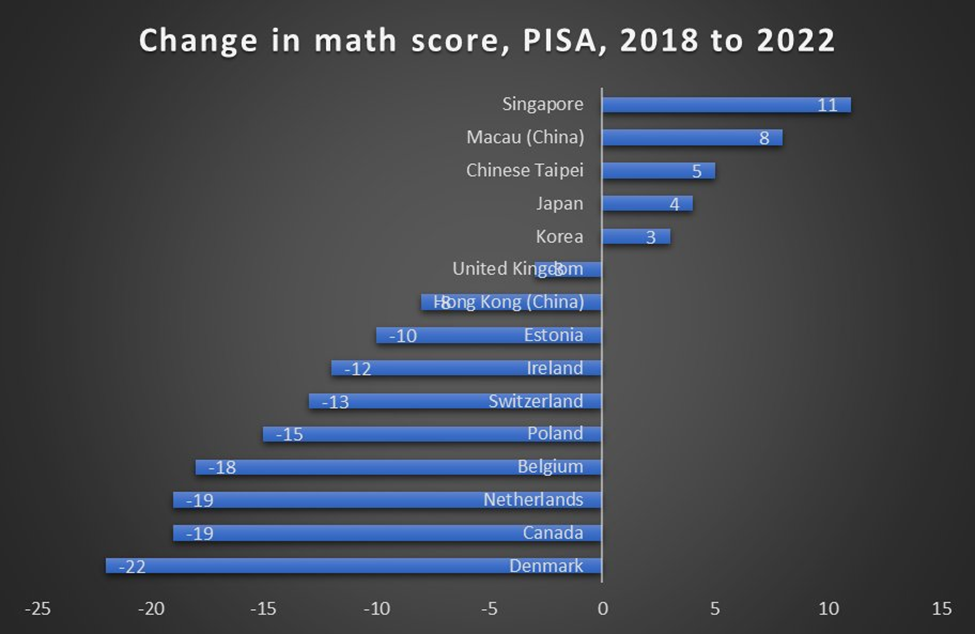
A few countries improved since 2018, the last time PISA was implemented, all from East Asia
Covid-19 was a disaster for the world’s schoolchildren
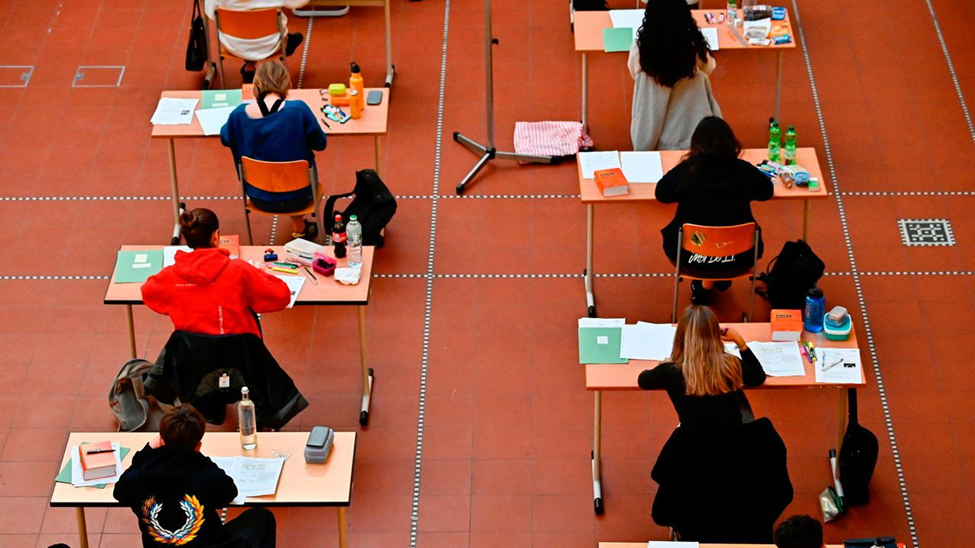
Every three years for the past two decades analysts at the OECE, a club of mostly rich countries, have asked pupils in dozens of places to take tests in reading, math and science, the better to compare the quality of their schools. No one was expecting the latest round of exams, sat a year late in 2022 after years of pandemic-induced disruption, to bring good news. But the results, released on December 5th, are still a blow. An average teenager in the rich world is found to have fallen about six months behind in reading and nine months behind in math, compared with peers who sat similar tests in 2018. In several rich countries 15-year-olds are performing at levels that back then would have been expected of learners a full year younger.
Here’s how we can turn this learning crisis around | Murthi, Banerji | It is a shocking fact that around 70 percent of 10-year-olds in low- and middle-income countries can’t read and understand a simple text. With reading essential for all learning, a child who can’t read by age 10 risks being left behind for good, even if they are enrolled in school. What’s even more shocking is that, broadly speaking, there is not enough urgent action across countries to address the crisis in foundational learning. Misplaced optimism and faulty beliefs on the part of policymakers, teachers and parents are partly to blame. Low and inefficient spending and a lack of political will to drive change are another challenge. Policymakers, for their part, tend to overestimate the state of affairs. A 2020 survey of senior education officials from 35 developing countries estimated that 47 percent of 10-year-olds in their country could read with comprehension, compared with assessment data showing the number was only 23 percent.
Teachers in technical and vocational education and training are critical for successful workforce development | Tanaka, Angel-Urdinola, Rodon | Technical and vocational education and training (TVET) teachers play a crucial role in equipping individuals with practical skills for the workforce, yet their significance is often overlooked and underappreciated. TVET focuses on providing youth and adults with relevant knowledge and skills for work and life. Thus, TVET teachers possess the most broad and complex mandate among all teaching levels.
Schooling and Intergenerational Mobility: Consequences of Expanding Higher Education Institutions | Katzkowicz, Lavy, Querejeta, Rosá | The rate of return on higher education in developing countries is high and increasing. Yet, post-secondary schooling attainment remains low. There are diverse explanations for this low human capital investment related to family background and city or locality characteristics. These are related to the so-called “birth lottery” and further lead to low intergenerational mobility and spatial inequalities in opportunities. Poor post-secondary education infrastructure and opportunities partly explain the low higher education rates in developing countries. This paper estimates the effect of a program that improved post-secondary education infrastructure by building many university campuses across Uruguay. By lowering the distance to a university campus, the program successfully increased university enrollment, particularly of less privileged students who are the first in their families to attend a university. The program impacted students from localities up to 30 kilometers from the new campus, reducing spatial inequality. Importantly, this expansion did not lower university completion rates. Furthermore, the program increased high school attendance and completion rates and the proportion of educated workers in the affected localities.
Development charities shift focus to urban areas | The Covid-19 pandemic brought widespread suffering in many parts of the world, but it also helped create new economic opportunities for impoverished young people in Kenya’s sprawling informal urban settlements… Many see the need for a greater focus on education and jobs to support wellbeing. Diego Angel-Urdinola, senior economist for skills and workforce development at the World Bank, says: “Investment in human capital among youth and young adults yields high and positive life-long returns. We need training programmes across the spectrum for those with low skills and who are disengaged [with] higher level [programmes] around innovation and entrepreneurship.” He argues that the most effective programmes “provide a holistic approach focused on skills relevant to the labour market, and cognitive skills in high demand — including communication and critical thinking”… As Angel-Urdinola argues: “We need to focus on skills that can’t be automated or that can adjust. We must learn to learn.”
 Education, economics and public policy