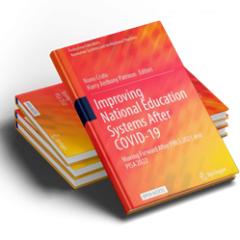
Education Trends | (News and Research 355)
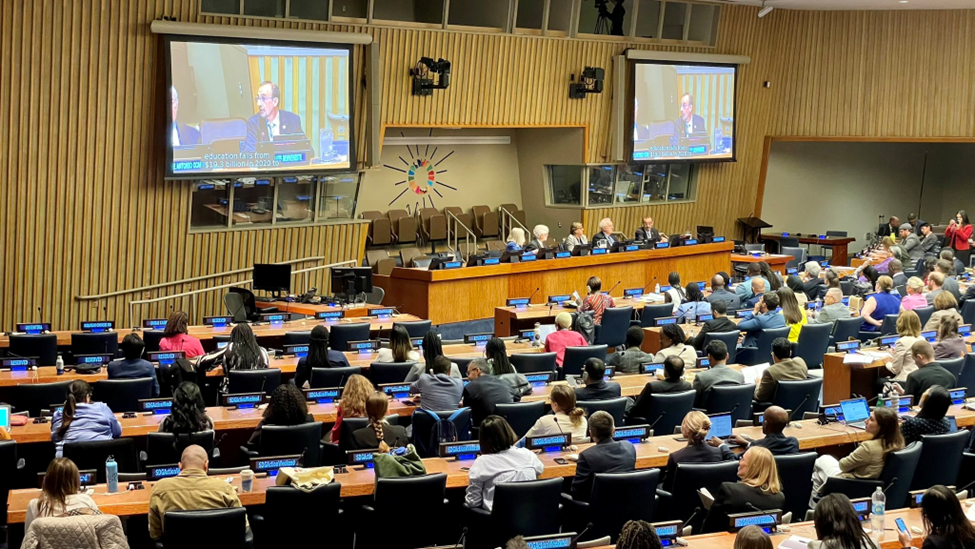
The World Bank is the largest external financier of education in low- & middle- income countries, with a portfolio of about $24B in 95 countries – Luis Benveniste, Global Director, Education, at the United Nations General Assembly meetings, September 17, 2023
Four of the biggest problems facing education—and four trends that could make a difference | Velez, Patrinos | In 2022, we published, Lessons for the education sector from the COVID-19 pandemic, which was a follow up to, Four Education Trends that Countries Everywhere Should Know About, which summarized views of education experts around the world on how to handle the most pressing issues facing the education sector then. We focused on neuroscience, the role of the private sector, education technology, inequality, and pedagogy. Unfortunately, we think the four biggest problems facing education today in developing countries are the same ones we have identified in the last decades.
1. The learning crisis was made worse by COVID-19 school closures
Low quality instruction is a major constraint and prior to COVID-19, the learning poverty rate in low- and middle-income countries was 57% (6 out of 10 children could not read and understand basic texts by age 10). More dramatic is the case of Sub-Saharan Africa with a rate even higher at 86%. Several analyses show that the impact of the pandemic on student learning was significant, leaving students in low- and middle-income countries way behind in mathematics, reading and other subjects. Some argue that learning poverty may be close to 70% after the pandemic, with a substantial long-term negative effect in future earnings. This generation could lose around $21 trillion in future salaries, with the vulnerable students affected the most.
2. Countries are not paying enough attention to early childhood care and education (ECCE)
At the pre-school level about two-thirds of countries do not have a proper legal framework to provide free and compulsory pre-primary education. According to UNESCO, only a minority of countries, mostly high-income, were making timely progress towards SDG4 benchmarks on early childhood indicators prior to the onset of COVID-19. And remember that ECCE is not only preparation for primary school. It can be the foundation for emotional wellbeing and learning throughout life; one of the best investments a country can make.
3. There is an inadequate supply of high-quality teachers
Low quality teaching is a huge problem and getting worse in many low- and middle-income countries. In Sub-Saharan Africa, for example, the percentage of trained teachers fell from 84% in 2000 to 69% in 2019. In addition, in many countries teachers are formally trained and as such qualified, but do not have the minimum pedagogical training. Globally, teachers for science, technology, engineering, and mathematics (STEM) subjects are the biggest shortfalls.
4. Decision-makers are not implementing evidence-based or pro-equity policies that guarantee solid foundations
It is difficult to understand the continued focus on non-evidence-based policies when there is so much that we know now about what works. Two factors contribute to this problem. One is the short tenure that top officials have when leading education systems. Examples of countries where ministers last less than one year on average are plentiful. The second and more worrisome deals with the fact that there is little attention given to empirical evidence when designing education policies.
To help improve on these four fronts, we see four supporting trends:
1. Neuroscience should be integrated into education policies
Policies considering neuroscience can help ensure that students get proper attention early to support brain development in the first 2-3 years of life. It can also help ensure that children learn to read at the proper age so that they will be able to acquire foundational skills to learn during the primary education cycle and from there on. Inputs like micronutrients, early child stimulation for gross and fine motor skills, speech and language and playing with other children before the age of three are cost-effective ways to get proper development. Early grade reading, using the pedagogical suggestion by the Early Grade Reading Assessment model, has improved learning outcomes in many low- and middle-income countries. We now have the tools to incorporate these advances into the teaching and learning system with AI, ChatGPT, MOOCs and online tutoring.
2. Reversing learning losses at home and at school
There is a real need to address the remaining and lingering losses due to school closures because of COVID-19. Most students living in households with incomes under the poverty line in the developing world, roughly the bottom 80% in low-income countries and the bottom 50% in middle-income countries, do not have the minimum conditions to learn at home. These students do not have access to the internet, and, often, their parents or guardians do not have the necessary schooling level or the time to help them in their learning process. Connectivity for poor households is a priority. But learning continuity also requires the presence of an adult as a facilitator—a parent, guardian, instructor, or community worker assisting the student during the learning process while schools are closed, or e-learning is used.
To recover from the negative impact of the pandemic, the school system will need to develop at the student level: (i) active and reflective learning; (ii) analytical and applied skills; (iii) strong self-esteem; (iv) attitudes supportive of cooperation and solidarity; and (v) a good knowledge of the curriculum areas. At the teacher (instructor, facilitator, parent) level, the system should aim to develop a new disposition toward the role of teacher as a guide and facilitator. And finally, the system also needs to increase parental involvement in the education of their children and be active part in the solution of the children’s problems. The Escuela Nueva Learning Circles or the Pratham Teaching at the Right Level (TaRL) are models that can be used.
3. Use of evidence to improve teaching and learning
We now know more about what works at scale to address the learning crisis. To help countries improve teaching and learning and make teaching an attractive profession, based on available empirical world-wide evidence, we need to improve its status, compensation policies and career progression structures; ensure pre-service education includes a strong practicum component so teachers are well equipped to transition and perform effectively in the classroom; and provide high-quality in-service professional development to ensure they keep teaching in an effective way. We also have the tools to address learning issues cost-effectively. The returns to schooling are high and increasing post-pandemic. But we also have the cost-benefit tools to make good decisions, and these suggest that structured pedagogy, teaching according to learning levels (with and without technology use) are proven effective and cost-effective.
4. The role of the private sector
When properly regulated the private sector can be an effective education provider, and it can help address the specific needs of countries. Most of the pedagogical models that have received international recognition come from the private sector. For example, the recipients of the Yidan Prize on education development are from the non-state sector experiences (Escuela Nueva, BRAC, edX, Pratham, CAMFED and New Education Initiative). In the context of the Artificial Intelligence movement, most of the tools that will revolutionize teaching and learning come from the private sector (i.e., big data, machine learning, electronic pedagogies like OER-Open Educational Resources, MOOCs, etc.). Around the world education technology start-ups are developing AI tools that may have a good potential to help improve quality of education.
After decades asking the same questions on how to improve the education systems of countries, we, finally, are finding answers that are very promising. Governments need to be aware of this fact.
We need transformational change to be ready for the next pandemic | Ellen Johnson Sirleaf
| Leaders must treat these risks as existential — one of very few threats that can change the world in days.
Bjorn Lomborg calls for a new approach to meeting global development goals | …Primary education can also be made much more efficient. In every classroom, some students struggle, while others are bored because instructors cannot teach each student at their specific level. But tablets with educational software can, and can be shared around schools. Large trials have conclusively shown significant benefits for children using such tablets for just one hour a day. In one year, a student can now learn what normally takes three. Along with other tested policies, The Economist has calculated that the cost of improving primary education for almost half a billion school children would be nearly $10bn. It would be money well spent: better-educated pupils are more productive when they enter the workforce. That would raise the future discounted lifetime incomes of those who benefit from the policies by more than $600bn.
Technical Panel, Educate a Child Lecture Series: Lessons from the Field at Columbia University | September 17, 2023 | Event recording is available at: https://youtu.be/x133GF9ENgg
2021 PIRLS test results starkly illustrate global learning loss | Murray | The first pandemic-influenced data from the Progress in International Reading Literacy Study (PIRLS) test are in. Unsurprisingly, an initial analysis says the news is bad.
**********
Returns to Education Turns 50 | Submit a Manuscript to the Journal Education Economics for a Special Issue on the 50th Anniversary of the Returns to Education: An International Comparison | Manuscript deadline: 31 October 2023 | Special Issue Editor: Harry Patrinos, World Bank | Submit An Article | This year is the 50th anniversary of the publication of the book, Returns to Education: An International Comparison, by George Psacharopoulos (assisted by Keith Hinchliffe). Education Economics is publishing a special issue to mark this occasion and the contributions of Professor Psacharopoulos. The focus of this special issue is research on the returns to education. Research on international comparisons and /or returns to education in less developed economies are especially welcome.
 Education, economics and public policy